Light Pollution
What is light pollution?
Light pollution is the human-made alteration of outdoor light levels from those occurring naturally. Put another way, light pollution is human electromagnetic waste.
What are the effects of light pollution?
Light can be a pollutant
More than 80% of the world’s population lives under light-polluted skies, according to a study from DarkSky International. This means that a large portion of humanity experiences skyglow, where artificial light obscures the stars and makes it difficult to see the Milky Way. 1
Light pollution disrupts wildlife, impacts human health, wastes money and energy, contributes to climate change, and blocks our view of the universe.
How does light pollution affect astronomy?
Light pollution significantly hinders astronomy by reducing visibility of celestial objects and impacting the quality of astronomical research. It brightens the night sky, making it difficult to see faint stars, nebulae, and galaxies, and can also decrease the contrast when observing brighter objects like planets and the Moon. This makes it harder for both amateur and professional astronomers to study the universe.
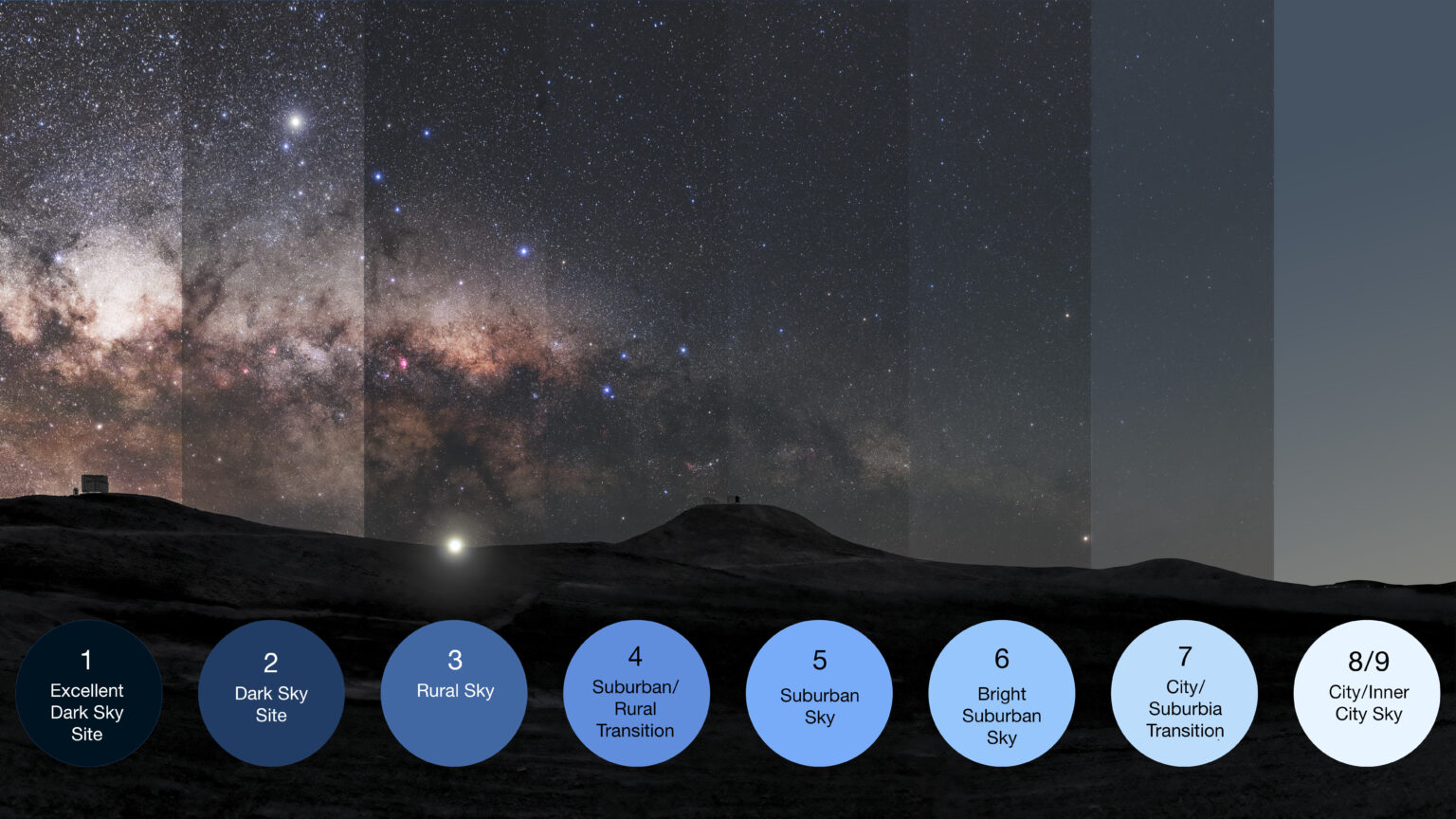
The image above illustrates the Bortle scale, which measures the impact of light pollution on the dark skies at a given location. It shows, from left to right, the increase in the number of stars and night-sky object visible in excellent dark sky conditions compared with cities. The illustration is a modification of an original photograph taken at ESO’s Paranal Observatory in Chile.
What effects can Light Pollution have on your health?
Humans evolved to the rhythms of the natural light/dark cycle of day and night. The proliferation of artificial light at night means many of us no longer experience truly dark nights.
Many studies have shown that exposure to artificial light at night negatively affects human health, including increased risk for:
- Sleep disorders
- Depression
- Obesity
- Diabetes
- Heart disease
- Cancer
Read more about the effects of Light Pollution on your health.
How does Light Pollution affect Earth's environment and ecosystems?
Nocturnal animals sleep during the day and are active at night. Light pollution radically alters their nighttime environment by turning night into day. According to research scientist Christopher Kyba, for nocturnal animals the introduction of artificial light probably represents the most drastic change human beings have made to their environment.
Predators use light to hunt, and prey species use darkness as cover, Kyba explains. Near cities, cloudy skies are now hundreds or even thousands of times brighter than they were 200 years ago. We are only beginning to learn what a drastic effect this has had on nocturnal ecology.
When we add light to the environment, that has the potential to disrupt habitat, just like running a bulldozer over the landscape can - Chad Moore, formerly of the U.S. National Park Service
What can be done about light pollution?
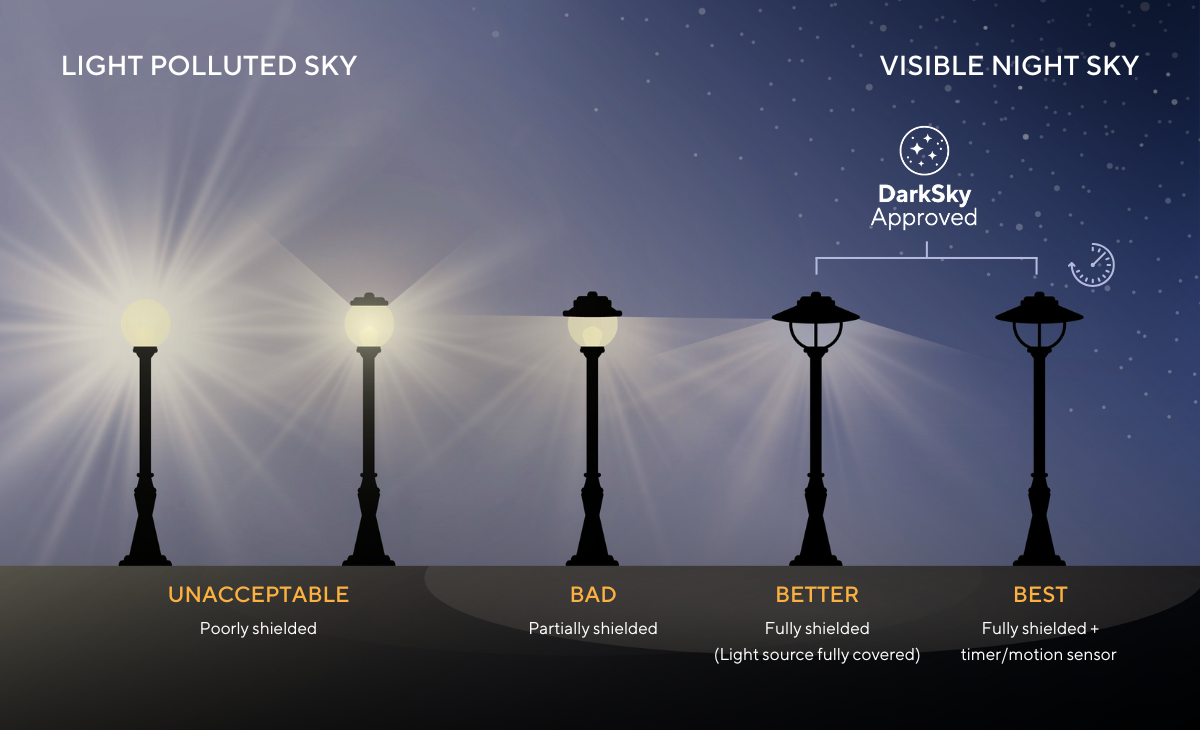
Following responsible lighting practices, passing dark sky friendly legislation, and advancing scientific research in this field are just some of the ways light pollution can be solved. You can get involved too!
What can you do?
- Only light the area that needs it
- Be no brighter than necessary
- Minimize blue light emissions
- Use fully shielded lighting (pointing downward)
- Spread the word – tell your friends and neighbors
Go to a dark sky site
Seeing the Milky Way stretch across the sky from a dark sky site can be awe-inspiring – everyone should experience it! Even veteran stargazers can have trouble finding their way around when there are so many stars that you can’t see any constellations.
There are over 160,000 square kilometers of protected land and night skies in 22 countries on 6 continents. These dark sky sites are where you can get away from city lights, and see the heavens as they were meant to be seen!
Join an astronomy club
There are numerous astronomy clubs and societies across the globe – some of them host star parties at observing sites, some have members who will set up telescopes, and talk about astronomy and space science at your venue.
If you live in the U.S., you can find astronomy clubs and events using NASA’s Night Sky Network; you can request an astronomy or space lecturer from the volunteer NASA/JPL Solar System Ambassador program.